

How To Choose The Right Survival Backpacks
A survival backpack is only as useful as its ability to keep your gear together when the load is real. A pack that looks fine empty can fail at the worst moment when it is carrying a water filter, emergency food, first aid kit, radio, fire starters, and tools. Choosing the right load-bearing capacity is not about finding the biggest bag; it is about choosing a pack that can carry your actual kit without tearing, sagging, or shifting weight onto your shoulders.
Quick Answer
Choose a survival backpack with a sturdy frame, a padded and adjustable hip belt, high-denier fabric, reinforced stitching, and solid hardware. The pack should comfortably carry your fully loaded bug out bag, not just an empty shell. Before buying, load it with your real survival gear and check for stress points, strap movement, and frame stability.
Table of Contents
- Quick Answer
- Our Top Picks
- Define Load-Bearing Capacity Before You Buy
- Check the Frame and Load-Transfer System
- Inspect Fabric, Stitching, and Hardware
- Fit the Pack to Your Body and Mission
- Test It With Real Survival Gear
- Buying Used or Surplus Packs
- Frequently Asked Questions
- Sources & References
Our Top Picks
Affiliate disclosure: if you buy through these links, we may earn a commission at no extra cost to you.



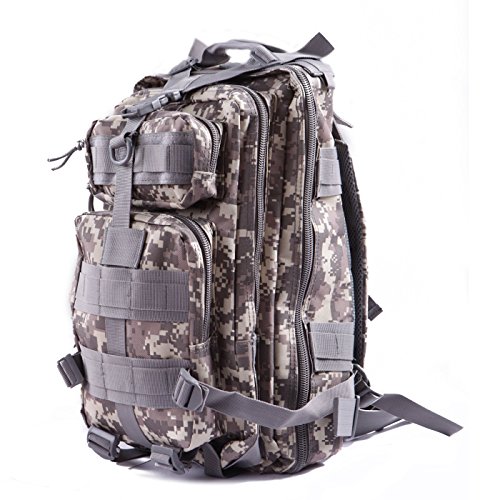
Define Load-Bearing Capacity Before You Buy
Load-bearing capacity is the amount of weight a pack can carry without its structure, straps, stitching, or hardware failing. A pack that is too light for your kit may look fine on the shelf, but it can fail in the field when the load is real. The first step is to define what you actually need to carry: a compact emergency kit, a full bug out bag, or a longer-term survival load with water purification, food, and tools.
Your pack size should match the mission. A small day pack may work for a short evacuation, but it will not be comfortable or reliable for a loaded bug out bag with freeze-dried food, a first aid kit, a survival knife, fire starters, and an emergency radio. If the pack is too small, you will overpack the top, strain the shoulder straps, and create a load that shifts while you move. If it is too large, you may carry unnecessary weight and waste space.
The practical rule is simple: the pack must carry your fully loaded kit with room for the load to sit close to your back and hips. A pack that cannot hold its shape under your normal load is not ready for a real emergency. Think in terms of your actual gear list, not a generic capacity number.
Check the Frame and Load-Transfer System
The frame is the backbone of a survival backpack. It determines how weight moves from the pack to your body. A weak or poorly designed frame can make a heavy pack feel unstable, pull on your shoulders, or shift when you stop and start. For serious survival use, the frame should stay firm under load and keep the pack close to your back.
Older external-frame packs were built for sustained marching loads and move weight toward the hips through a rigid frame. Internal-frame packs hug the body more closely and can feel more stable in rough terrain, but they need a proper fit to keep weight off the shoulders. Neither style is automatically better for every situation. The right choice depends on how much you carry, how far you expect to move, and how your body handles the load.
Look for a frame that does not flex, twist, or collapse when the pack is loaded. A pack that leans forward, sags at the bottom, or pulls the shoulder straps tight under load will fatigue you quickly. In a real evacuation, you need a pack that stays predictable when you are tired, moving through brush, or carrying extra gear.
Inspect Fabric, Stitching, and Hardware
Fabric matters because survival packs get snagged on branches, rocks, and sharp gear edges. Thin material may look clean, but it can tear when a survival knife, water filter, or tool presses against it. Look for high-denier nylon or other heavy-duty fabric that resists abrasion and snags. The material should feel thick, tight, and resistant when you rub it with your thumb.
Stitching is where many packs fail. Check the shoulder strap junctions, hip belt attachments, compression strap loops, and any point where webbing meets fabric. Bar-tack stitching at stress points helps prevent zippers, straps, and webbing from ripping out under load. A single loose thread at a strap anchor can become a full failure when the pack is heavy and moving.
Hardware is the part people overlook. Plastic buckles, clips, and adjusters can become brittle with age and UV exposure, even on packs that were used only occasionally. Squeeze and flex every buckle by hand. If a buckle feels loose, cracks under pressure, or has a hairline split, it may fail suddenly when the pack is loaded. Metal hardware is more likely to survive rough use, but it must still be solid and free of cracks.
Fit the Pack to Your Body and Mission
A survival backpack is only as good as its fit. A pack that fits one person perfectly may be uncomfortable or unsafe for another. The torso length, shoulder width, hip belt size, and strap adjustability all affect how the load sits. If the pack is too long, it will ride low and pull on your lower back. If it is too short, the weight will sit on your shoulders and make your arms feel heavy.
The hip belt should wrap around your hips, not rest on your waist. It should be padded, adjustable, and secure enough to stay in place while you move. The shoulder straps should support the pack, but they should not be the main thing holding the weight. If the straps dig in, slide down, or force you to constantly readjust, the pack is not transferring the load correctly.
For long evacuations or forced marches, an internal frame with adjustable torso length and a load-lifter strap system can reduce shoulder fatigue. The load-lifters should bring the top of the pack closer to your shoulders without pulling the pack down. The goal is a stable load that moves with your body, not one that fights you at every step.
Test It With Real Survival Gear
Do not judge a survival backpack by how it looks empty. Put in the gear you would actually carry: a water filter, purification supplies, emergency food or freeze-dried meals, a first aid kit, fire starters, a survival knife, prepper tools, and an emergency radio. Then check how the pack sits, how the straps behave, and whether the frame stays firm. This is the only honest way to see whether the pack can handle your real load.
While walking, pay attention to the bottom of the pack. If the heavy items sink, the pack may need internal dividers or a better load layout. Heavy items should sit close to your back and centered over your hips. Light items can go higher. A poorly organized pack will feel heavier than it is because the weight shifts and pulls on your body.
Also test the pack in the conditions you expect to use it. If you may move through brush, over rocks, or in wet weather, check that the fabric handles abrasion and that the hardware stays dry enough to work. A pack that only works in a store or a clean yard is not ready for real survival use.
Buying Used or Surplus Packs
Used and surplus packs can be strong options, but they require a different inspection. A pack may look clean on the outside while the stitching, frame, or hardware is already worn. Check the seams for fraying, the frame for bends or weak points, and the straps for thin spots. A pack that has been stored in a hot garage or left in direct sunlight may have plastic hardware that is ready to crack.
On surplus packs, stenciled markings can help identify the model, load-bearing system, and generation. That information can matter more than the visual condition, especially when the pack has been stored for a long time. A pack with a known, sturdy load-bearing system is often more reliable than one that looks newer but has weak construction.
If you buy a used pack, treat it like a field tool, not a fashion item. Clean it, inspect every buckle, recheck the stitching, and load it with your actual gear before you rely on it. A used pack can be a strong survival tool, but only if it passes the same inspection you would apply to a new one.
Frequently Asked Questions
What is a good load-bearing capacity for a bug out bag?
A good load-bearing capacity is the amount of weight your pack can carry without the frame, straps, stitching, or hardware failing. The best answer depends on your body, your gear list, and the distance you expect to move. The pack should carry your fully loaded bug out bag comfortably, with the weight close to your back and hips.
How do I know if a survival backpack is strong enough?
Check the frame, fabric, stitching, and hardware. The frame should stay firm under load. The fabric should resist snags and abrasion. The stitching should be reinforced at stress points. The buckles and straps should be solid and free of cracks. The best test is to load the pack with your actual gear and walk with it.
Is an internal frame or external frame better for survival use?
Neither is automatically better. External-frame packs were designed for sustained heavy loads and move weight through a rigid frame. Internal-frame packs fit closer to the body and can be more stable in rough terrain, but they need a proper fit to keep weight off the shoulders. Choose the style that fits your body and handles your real load without shifting or pulling.
What fabric should I look for in a survival backpack?
Look for heavy-duty, high-denier nylon or similar abrasion-resistant fabric. The material should feel thick and tight, and it should resist snags from branches and sharp gear edges. Thin fabric may save weight, but it is more likely to tear when the pack is loaded and moving through rough terrain.
How important is the hip belt?
Very important. A padded, adjustable hip belt helps move the main load from your shoulders to your hips. If the hip belt is thin, loose, or poorly shaped, the pack will feel heavier and more tiring. The hip belt should stay in place while you walk, climb, or stop and start.
Can I rely on a used surplus survival pack?
You can, but only after a full inspection. Check the frame, stitching, straps, buckles, and any markings that identify the model or generation. A used pack with solid construction and intact hardware can be more reliable than a new pack with weak design. If any part is cracked, torn, or weak under load, do not rely on it.
The right survival backpack is not the one with the most features; it is the one that keeps your gear secure when the load is real. Check the frame, fit, fabric, stitching, and hardware, then test the pack with your actual survival kit. If it carries your water filter, emergency food, first aid kit, radio, tools, and fire starters without pulling, shifting, or showing stress, you have a pack worth trusting.


