

Survival Kits vs Water Filters: Which Should You Buy in 2026?
By Survivalgearlab Editorial
When an emergency cuts off normal supplies, water becomes the first problem that can turn a manageable situation into a life-threatening one. That is why survival kits and water filters are often placed side by side in preparedness shopping results. They are not interchangeable, though. A survival kit is a collection of tools for several problems, while a water filter is a specialized piece of equipment for treating water from a source.
This comparison is for preppers, hikers, hunters, and anyone building a 72-hour kit, bug-out bag, vehicle kit, or shelter-in-place plan. The practical answer depends on what you already own. If you are starting with nothing, a carefully inspected survival kit can cover more immediate gaps. If you already have fire, first aid, lighting, shelter, and stored water handled, a dedicated water filter may be the more important purchase. Buy by function, not by the product category shown in an online search. Preparedness listings often mix water straws, broad survival kits, lanterns, and other adjacent gear.
Affiliate disclosure: if you buy through these links, we may earn a commission at no extra cost to you.



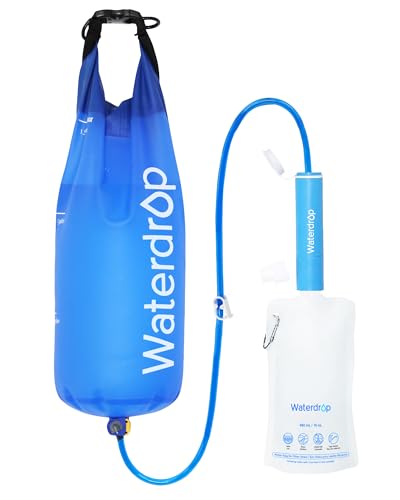
Table of Contents
- Our Top Picks
- Quick Verdict
- About Survival Kits
- About Water Filters
- Head-to-Head: Water Availability and Capacity
- Head-to-Head: Portability and Weight
- Head-to-Head: Reliability, Contaminants, and Maintenance
- Head-to-Head: Cost and Long-Term Value
- Who Should Choose Survival Kits?
- Who Should Choose Water Filters?
- Our Verdict
- Frequently Asked Questions
- Sources & References
Our Top Picks
Affiliate disclosure: if you buy through these links, we may earn a commission at no extra cost to you.
Quick Verdict
Choose Survival Kits if...
- You need a broad starting point for a 72-hour kit, vehicle kit, or general emergency loadout.
- You are missing several essentials at once, such as first aid, fire-starting, lighting, signaling, or basic repair tools.
- You are willing to inventory the contents, test the gear, and replace weak or expired components instead of trusting the advertised piece count.
Choose Water Filters if...
- Your main preparedness gap is access to usable water and you already have the other basic survival categories covered.
- You need a lightweight option for a one-person bug-out bag, hiking pack, or emergency vehicle kit.
- You are prepared to match the filter to the water source, understand its contaminant limits, and keep boiling or another purification backup when necessary.
| Factor | Survival Kits | Water Filters |
|---|---|---|
| Price Range | Varies widely by contents, quality, and advertised piece count. There is no honest single range without comparing itemized contents. | Approximately $20 to $90 among the cited filter examples, from personal straw-style filters to larger gravity systems. |
| Best For | Building a broad emergency kit or filling several preparedness gaps at once. | Treating available source water for personal bug-out use or family shelter-in-place use with the right filter format. |
| Setup Difficulty | Easy to purchase, but requires sorting, testing, learning, and replacing unsuitable items. | Usually simple for straw and squeeze designs; gravity-fed and larger systems require more deliberate setup and maintenance. |
| Reliability | Depends on every individual component, its storage condition, and whether the kit actually contains useful gear. | Reliable only within the stated capacity, contaminant limits, and maintenance requirements. |
| Key Advantage | Breadth. One package can address several different emergency problems. | Specialized water treatment with no electricity or moving parts in many personal straw-style designs. |
| Main Drawback | A large piece count can hide low-value items, uncertain shelf life, and the absence of a real water supply. | It cannot create water, and many filters do not remove chemicals, salt, fuel, heavy metals, or every virus unless the product specifically says they do. |
About Survival Kits
A survival kit is best understood as a bundle of capabilities, not as a guarantee of survival. A decent kit may help you address first aid, fire, light, signaling, shelter, cutting, or basic repairs, depending on what is actually included. That breadth is valuable when you are assembling a vehicle kit or 72-hour bag from scratch. It is also the main reason people buy one: several problems can arise at the same time, and carrying each item separately takes planning.
The problem is that survival kits are not standardized. The supplied Amazon results illustrate the issue clearly: a lightweight emergency water-straw product appears beside broad 250-piece and 262-piece survival kits. Those products may all be marketed toward preparedness, but they do not provide the same capability. A high piece count is not proof of better performance. Lay the contents out, identify what each item does, check whether the tools are usable, and decide whether the kit fits your actual route, climate, vehicle, and family size.
Survival kits also demand more shelf-life management than many buyers expect. There is no single shelf-life rating for an entire kit because the components age differently. Food, medical supplies, batteries, water-treatment items, and chemical products should be checked according to their labels and replaced when necessary. Most importantly, a general kit is not a water plan. The emergency water-planning baseline cited by Protocol Survival is at least one gallon per person per day for drinking and sanitation. For a family of four planning for two weeks, SurvivalLab estimates that means 56 gallons. A small kit with a filter straw does not replace that reserve.
About Water Filters
A water filter earns its space by doing one job well: treating water from an available source within the limits stated by the manufacturer. That makes it a particularly useful tool for a lightweight bug-out bag, hiking pack, or emergency vehicle kit. Straw-style personal filters are generally about two ounces, need no electricity or moving parts, and can be carried without noticeably changing a loadout. Their tradeoff is important: they generally require drinking directly from the source rather than filling containers for later use.
The filter format should match the scenario. SurvivalStockUp and Protocol Survival both distinguish personal straw or squeeze filters from gravity-fed and countertop systems. Personal designs make sense when one person is moving and needs a compact way to treat water. Gravity-fed systems are more practical for families sheltering in place because they can process water for several people without requiring everyone to drink directly from a stream or container.
The examples show why capacity and purchase price must be read together. The Sawyer Squeeze uses a 0.1-micron hollow-fiber membrane and is described by SurvivalLab as capable of processing up to 100,000 gallons with proper backwashing; SurvivalStockUp lists it at approximately $35. The LifeStraw Personal uses a draw-through design and is rated for 1,000 gallons at approximately $20. The Katadyn BeFree combines a 0.1-micron membrane with a fast-flow Hydrapak bottle. For a larger setup, the Platypus GravityWorks 4L is listed at approximately 1,500 gallons per filter and about $90. These ratings only matter if the filter is used, cleaned, stored, and replaced according to its instructions.
Head-to-Head: Water Availability and Capacity
A survival kit can help you manage a water emergency, but it may not contain enough water to sustain anyone. It might include a straw, bottle, pouch, or purification aid, but you must inspect the actual contents rather than assume. The one-gallon-per-person-per-day planning figure includes drinking and sanitation, so a small filter is only one part of the solution. It helps when a dependable water source is available; it does nothing for a dry campsite or a household with no stored reserve.
A water filter also does not eliminate the need to store water. Its purpose is to extend your options when you can reach a lake, stream, tank, or other source that the filter is designed to treat. For a family of four, the cited two-week estimate is 56 gallons. No personal straw should be treated as a substitute for that kind of storage plan. The better approach is stored water for immediate use, a suitable filter for replenishment, and a backup purification method.
Head-to-Head: Portability and Weight
Survival kits are portable by design, but portability depends on what the kit contains and how much of it is useful. More tools, duplicate items, and oversized packaging all add weight. A kit that stays in a vehicle can be broader and heavier than one carried over a mountain, while a true bug-out bag must be judged by the weight of the complete packed loadout. Measure the bag as packed instead of trusting the product title or piece count.
Personal water filters are much easier to carry when water access is the main concern. Straw-style filters at about two ounces are attractive for runners, hikers, and one-person emergency bags. That low weight comes with a narrower job description. If you need to treat water for several people, a gravity-fed system may be the better tool even though it takes more room and requires a more deliberate setup. The lightest filter is not automatically the best filter; it is only the best choice when its operating method matches the situation.
Head-to-Head: Reliability, Contaminants, and Maintenance
The reliability of a survival kit is limited by its weakest important component. A kit can look impressive in a photograph while still leaving you without a dependable light, usable cutting tool, adequate first-aid supplies, or a workable water solution. Reliability comes from opening the package, checking every item, learning how it works, and replacing anything that is damaged, expired, or unsuitable. The kit should be treated as equipment that requires inspection, not as a sealed insurance policy.
Water filters offer more measurable specifications, but those specifications are easy to misunderstand. A 0.1-micron membrane and a large gallon rating do not mean the filter removes every possible hazard. Protocol Survival warns that many survival filters do not remove chemicals, salt, fuel, heavy metals, or every virus unless the product specifically says they do. SurvivalLab likewise recommends treating filtration as one layer of a broader water plan. If the filter does not cover a contaminant of concern, retain a boiling or other purification backup. Boiling itself requires a dependable fuel source, so that backup must be planned rather than assumed.
Head-to-Head: Cost and Long-Term Value
Survival kit pricing is difficult to compare honestly because the products are not standardized. One kit may contain a large number of inexpensive accessories, while another may include fewer but more useful tools. A low price can be worthwhile if it fills several genuine gaps, but the same price can be wasteful if the kit is mostly duplicates or items you will never carry. The correct comparison is the cost of the useful components you would otherwise have to buy separately.
Water filters are easier to evaluate because manufacturers provide capacity and operating specifications, although those claims still depend on maintenance and suitable water. The cited examples range from approximately $20 for the LifeStraw Personal to approximately $35 for the Sawyer Squeeze and approximately $90 for the Platypus GravityWorks 4L. SurvivalLab's editorial recommendation places the Sawyer Squeeze at the best overall balance of weight, flow rate, and cost per gallon, while LifeStraw is positioned for grab-and-go simplicity and Katadyn BeFree for speed and convenience. Choose the filter that solves your problem, not simply the one with the largest number on the package.
Who Should Choose Survival Kits?
Choose a survival kit if you are starting with a nearly empty preparedness shelf and need to cover several categories quickly. It can be a sensible first purchase for a car, apartment, hunting camp, or 72-hour bag, especially when you do not yet have reliable fire-starting gear, first aid, lighting, signaling, or basic tools. The kit is most useful when you treat it as a starting inventory rather than a finished system.
Before relying on it, open it and make a checklist. Remove duplicates, test the tools, read the instructions, separate items that need protection from heat or moisture, and mark components that need periodic replacement. Then add the items the kit lacks, particularly stored water and a water-treatment plan. If the kit contains a straw-style filter, verify whether it is meant for direct drinking, how much water it is rated to process, and what contaminants it does not address.
Who Should Choose Water Filters?
Choose a water filter if your general survival gear is already in place and water is the weak link. A personal straw or squeeze filter is a strong fit for a one-person bug-out bag, hiking pack, or emergency vehicle kit where low weight matters. The Sawyer Squeeze is the strongest all-around example among the supplied options because SurvivalLab recommends it for its balance of weight, flow rate, and cost per gallon. Its stated capacity still depends on proper backwashing and appropriate use.
Choose a gravity-fed or countertop system when several people may need water at a fixed location. That setup is generally more practical for a family sheltering in place than asking everyone to use a personal draw-through straw. Whatever format you select, keep stored water for immediate needs and retain a backup method for contaminants the filter does not remove. A filter is valuable because it expands your options, not because it makes every water source safe.
Our Verdict
If you are building an emergency setup from zero, buy a carefully inspected survival kit first, but do not stop there. Use it to cover the broad basics, then add stored water and a dedicated filter. A kit gives you more capability across different problems, but its contents must be verified and its shelf-life issues managed.
If you already have a competent first-aid kit, fire starter, light, shelter, tools, and stored water, buy the water filter. Water is too important to leave to a generic accessory buried in a large bag. For one-person mobility, start with a personal straw or squeeze system. For a family sheltering in place, move toward gravity-fed or countertop capacity. The best overall balance among the cited examples is the Sawyer Squeeze, while LifeStraw favors simplicity and Katadyn BeFree favors speed and convenience. In every case, pair filtration with stored water and a backup purification method that covers the contaminants your filter does not.
Frequently Asked Questions
Can a water filter replace stored emergency water?
No. A filter requires a usable water source and cannot help if no source is available. The emergency planning baseline cited by Protocol Survival is at least one gallon per person per day for drinking and sanitation. Stored water covers immediate needs, while a filter provides an additional way to treat suitable source water later.
Is a straw-style filter suitable for a whole family?
Usually not as the primary family system. Straw-style personal filters are designed around direct drinking and are generally better suited to one person on the move. For a family sheltering in place, a gravity-fed or countertop system is more practical because it is designed around treating water for multiple people. A two-week supply for a family of four is estimated at 56 gallons, so storage remains essential.
Which water filter is the best overall choice?
Among the cited options, SurvivalLab recommends the Sawyer Squeeze for the best overall balance of weight, flow rate, and cost per gallon. It uses a 0.1-micron hollow-fiber membrane and is described as capable of processing up to 100,000 gallons with proper backwashing. Its approximately $35 price and high stated capacity are attractive, but the filter still has to be maintained and used within its contaminant limits.
Do water filters remove chemicals and viruses?
Not necessarily. Protocol Survival warns that many survival filters do not remove chemicals, salt, fuel, heavy metals, or every virus unless the product specifically says they do. Read the exact contaminant claims before purchase. If the filter does not cover a hazard you may encounter, keep boiling or another appropriate purification method as a backup. Remember that boiling requires fuel.
Should I buy the survival kit with the most pieces?
No. Piece count is a poor measure of preparedness. Inspect the actual contents, test the tools, remove duplicates, check component shelf life, and determine whether the kit addresses your environment and likely emergencies. A smaller kit with dependable, useful gear is usually more valuable than a large kit filled with items you cannot identify, carry, or rely on.


